Digital entertainment does a lot of things well. Streaming, gaming, scrolling; all of it serves a real purpose and there is no argument worth having against any of it. But there is a specific kind of evening that screens cannot produce, no matter how good the content is, and most people who have experienced it know exactly what it feels like. It is the kind of evening that becomes a story you tell later.
You Have Been Socialising Not Connecting
Think about the last time you were truly present with another person. Not in the same room while scrolling. Not texting while something played in the background. Actually present. Where you laughed about something that does not exist as a clip, where the conversation could go anywhere, where the room felt like a room. The digital world promised connection. It delivered proximity. Proximity, it turns out, is a very different thing
“We live so much but we experience so little. We see so much but we notice so little.” — Alain de Botton

What Happens When You Are Actually in the Room Together
The clearest difference between board games and most digital entertainment is physical presence. With digital games, you do not have to be in the same room as the people you are playing with. With board games, you have no choice, and that constraint turns out to be the whole point.
When you are sitting across from someone at a table, you can see their face. You can see the moment they realise their plan is not going to work. You can catch someone hesitating over a move and start reading what they are about to do before they do it. You can watch someone try to hide that they are winning. None of this is available through a screen, and none of it is trivial. It is the raw material of actual human connection.
When a group watches something together, they are all oriented toward the same external object. The screen is the subject. The people are the audience. There is no moment where one person’s decision changes the experience of everyone else in the room.
Put those same people around a board game and everything shifts. The subject becomes each other. Every choice one person makes lands directly on the others. Laughter happens because of something a person did, not something a writer scripted. Tension builds because of the person across the table, not a plot point on a screen.
Digital entertainment is something you consume alongside other people. Board games are something you create with them.
The Social Behaviours Nobody Plans For
After running playtests, attending board game conventions, and watching hundreds of people sit down with games for the first time, the thing that still stands out is how quickly strangers become comfortable with each other around a table.
A shared game removes the usual friction of meeting people you do not know. You have a common frame of reference immediately. You have something to react to together. You have wins, losses, and unexpected turns that generate genuine emotion and genuine emotion is what people actually remember about an evening.
The board game community globally tends to be welcoming, and that welcome extends further than most people expect. If you travel to a city you have never been to, find a board game meetup, and walk in, the odds are good that you will be playing within the hour regardless of whether you speak the language. You can sit down with people in Japan who speak very little English and play a game together, and the game handles the rest. Shoutout to the board game cafe in Japan – Pineapple Games. Very few things create that kind of connection as efficiently.
The Things That Only Happen Around a Table
There is a specific set of experiences that almost exclusively happen during games played in person.
Unscripted laughter; when someone makes a spectacularly bad decision or misreads a situation so completely that the whole table collapses. That laughter is shared authorship. Everyone made it happen.
The negotiation; half-sentence looks, real-time reads of whether someone is bluffing, the moment you decide to trust or not trust the person two feet away from you.
The debrief; the conversation that starts the moment someone wins or loses. Why did you do that? I was sure you were bluffing. This conversation, which goes nowhere in particular, is where friendships deepen.
Shared failure; nothing bonds people faster than collectively losing at a cooperative game. It is practice for the real world, disguised as play.
None of these have a digital equivalent. They require the specific friction of being in the same room with no algorithm managing the experience and no content to retreat into when the silence gets interesting.
“You pity the moth confusing the lamp for the moon, yet here you are confusing a screen for the world.”
The Friendships You Do Not Plan to Make
The connections that come out of board gaming tend to outlast the sessions themselves in a way that other entertainment rarely produces.
I know people I first met through playtesting games whom I can now call if I am in their city. Not because we made a plan to stay in touch, but because we spent enough time at tables together that the connection formed without anyone trying to build it. That is what shared games do when they are given enough time. They create the conditions for relationships to develop, and then they get out of the way.
This happens at conventions, at cafes, at home game nights, and at meetups that were supposed to last two hours and run until midnight. The game starts the process. The people finish it.
“Some of the loneliest people have the most friends on social media. Because collecting connections is what you do when you can’t maintain them.” — Gurwinder Bhogal

Why This Matters Now
Screens are better than they have ever been. Content is more abundant and more personalised than at any point in history. None of that is going to change. But abundance of content is not the same as quality of experience, and passive consumption does not produce the specific kind of memory that comes from being in a room with people who are reacting to the same thing you are in real time.
Research on loneliness consistently shows that the frequency of contact is not the same as the depth of it. You can have hundreds of digital exchanges in a day and still feel fundamentally unseen. The restlessness people feel toward screens is a correct identification that something is missing; something humans were built over a very long time to need.
Board games are a complement to digital life. The part of the evening where your phone goes face down and something happens that is genuinely unrepeatable. The story you tell on Monday about what happened on Friday night. The inside reference that a group carries for years. We have also written about the rise of Solo Games.
The screen will always be there. So will the algorithm, the feed, the notification, the passive content machine waiting to fill any silence you allow it.
A table, a game, and the right people in the room; that is something you have to choose.
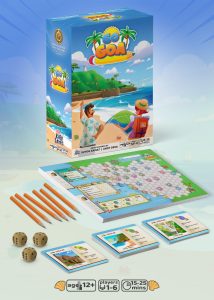
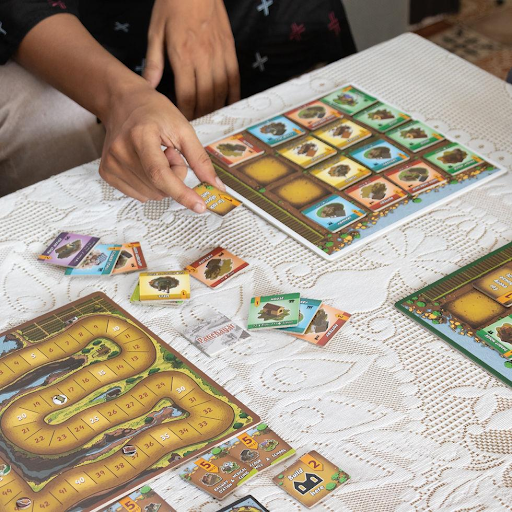
At Kheo Games, we design board games for Indian households, family nights, and social gatherings of all sizes. Go Goa and Panchayat are built for exactly the kind of evening described above, games to play with family, friends, and anyone worth spending a good night with.