
Most date nights cycle through the same three options: dinner out, a movie, or a walk if the weather cooperates. All three have one thing in common, you end up half-watching a screen someone else wrote, or sitting side by side instead of facing each other.
There’s a fourth option, and it’s the one this list is about: board games for couples. Pull up two chairs, put the phones on a shelf, and give each other actual attention for once. It still counts as a date, arguably a better one.
Below are some of the best two-player board games for couples, ranging from ten-minute filler games to genuine strategic showdowns. Some of these are purpose-built for exactly two players; others are bigger games that just happen to shine when it’s only the two of you. We’ve labeled each one so you know what you’re getting. The other thing worth deciding before you pick one: do you want to compete against each other, or team up against the game? That choice changes the whole mood of the evening more than anything else on this list. You can also find a summary at the end of the article if you’re in a hurry to set up your next adventure
1. Pandemic — Best Cooperative Board Game for Couples
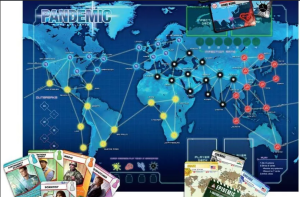
Built for: 2–4 players · shines brightest at 2 · 45–60 minutes
If competing against each other isn’t your idea of romantic, Pandemic flips the format entirely. You and your partner become a two-person team of disease specialists, sharing one hand of cards to cure four outbreaks before they spiral out of control. Epidemic cards throw in the occasional shared crisis that forces you to actually talk through a plan instead of just taking turns.
Each player gets a role card with a different special ability, which naturally splits the labor with one of you specializes in treating cities directly while the other focuses on moving supplies or trading cards efficiently. That built-in division of labor is what makes it feel like a real partnership instead of one person carrying the game. Play it during a genuinely stressful week and you’ll notice something: an argument about outbreak strategy feels a lot better than most other arguments.
Good for: couples who’d rather high-five over a shared win than gloat over a solo one. Read more here
2. Jaipur — Quickest Two-Player Trading Game
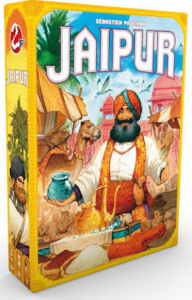
Built for: exactly 2 players · 10–15 minutes per round
Jaipur casts you both as rival traders buying and selling goods and camels in the markets of old Jaipur, racing to be the wealthier merchant over the best of three rounds. The whole game sits on a small table between you, just a market row of cards and two hands, which keeps it feeling intimate rather than like you’re managing a sprawling board.
The tension is very human: the market is shared and visible, so you can usually see exactly what your partner is going for, and every turn becomes a small negotiation with yourself over whether to block them or chase your own opportunity instead. It rewards reading your partner’s face and hesitations as much as it rewards reading the cards. Ten minutes in, you’re usually arguing over who gets the last camel, and that argument is the whole point.
Good for: a sharp, quick session on a weeknight when you don’t have an hour to spare. Read more here
3. Patchwork — Calmest Two-Player Board Game
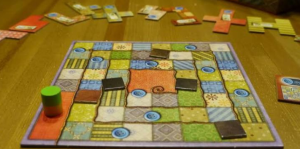
Built for: exactly 2 players · 15–30 minutes
Patchwork plays like a slow-motion game of Tetris, with each of you filling your own quilt board using irregular fabric pieces bought with buttons, trying to leave as few empty gaps as possible by the end. Every piece costs a different number of turns as well as buttons, so grabbing a piece now can mean your partner gets three free turns before you move again, which turns timing into its own quiet puzzle.
There’s no direct confrontation here, nothing to block, nothing to steal. You’re each just building your own small, cozy thing at your own pace, occasionally glancing over to see how the other’s quilt is coming along. Because it’s designed specifically for two players rather than scaled down from something bigger, the pacing feels tight in a way few games manage.
Good for: unwinding together rather than competing for bragging rights. Read more here
4. Azul — Best Two-Player Tile-Laying Game
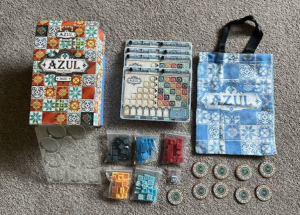
Built for: 2–4 players · shines brightest at 2 · 30–45 minutes
Azul has you drafting colorful tiles from shared displays each round, arranging them onto your own wall for points while trying to avoid the penalty tiles that pile up if you take more than you can use. It takes a little longer to explain than most games on this list, the scoring has a few layers to it, but once it clicks, the tile-laying itself is genuinely satisfying in a tactile, almost meditative way.
It supports up to four players, but two is where it’s tightest and most personal, since every tile your partner takes is a tile you can’t have. Reading their board to guess what they’re setting up becomes half the game.
Good for: couples who like a bit of tactical bite with their tabletop time. Read more here
5. Codenames Duet — Best Cooperative Word Game for Couples
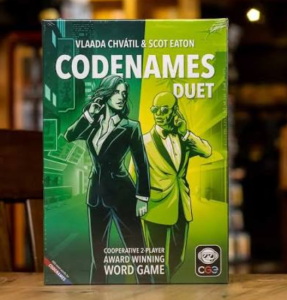
Built for: exactly 2 players · 15–30 minutes
Codenames Duet rebuilds the popular party game as a genuine two-player cooperative experience, and it suits couples even better than the original party version does. You share one grid of twenty-five words, taking turns giving each other one-word clues to find your shared agents while steering clear of the assassin word, all against a limited, shared pool of turns that keeps the pressure on.
Because you’re both giving and guessing clues throughout the game, it becomes a genuinely intimate exercise in how well you can predict what a single word means inside your partner’s head. That’s a strangely accurate stand-in for how well you actually know each other.
Good for: an easy pre-dinner game, or a lighter close to the evening after something heavier like Azul. Read more here
6. Hive – Best Tactile Game for Couples Who Love Chess
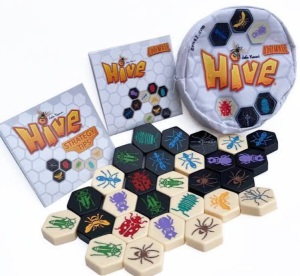
Built for: exactly 2 players · 45+ minutes
If you love a tactile tile placement game, you cannot go wrong with Hive. It’s such an amazing feeling to hold those tiles in your hands. This is even if you do not really enjoy the creatures printed on them.
The amazing part of this game is that you can play it on any flat surface without the need for a table. The game comes with 22 tiles so it’s easy to carry around too. What’s a better alternative for a date night by the beach?
The game feels a lot like chess, as it has very simple rules but the strategy that comes out of the play is very rich. Each piece has its own movement rules and also placement rules that make the game strategic.
Good for: if you love chess, you will love this board-less game. Check it out here
7. Sky Team – Best Recent 2-Player Game
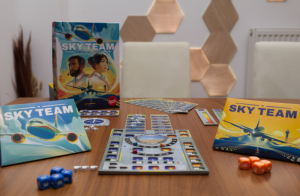
Built for: exactly 2 players · 20 minutes
One of the most recent cooperative modern board games for 2 players, Sky Team took the world by storm.
You and your partner act with limited communication which makes the game tougher. Together you are a pilot and the co-pilot trying to land the plane in tough situations. You will love this game which brings the feelings of tough flight right to your table. The scenarios get increasingly difficult as you make progress in this game. The game components bring the cockpit to life with its visuals and the layout.
Good for: very replayable game, if you love challenges. Check it out here
Want Something With Real Roots Instead?
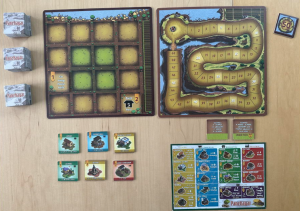
If you like the village-building strategy of Pandemic or the tile-laying tension of Azul, it’s worth trying Panchayat from Kheo Games which is a light-strategy tile-placement game where you and your partner build a thriving Indian village together, tile by tile. It’s designed to hold up just as well played as a couple as it does with a full table of four, and it’s a nice change of pace if you’ve already worked through the games above.
Quick Comparison: Best Board Games for Couples
| Game | Best For | Built For Two? | Play Time | Style | Price |
| Pandemic | Teaming up instead of competing | Shines at 2 (2–4 players) | 45–60 min | Cooperative | $$ |
| Jaipur | A quick, sharp weeknight session | Built for 2 | 10–15 min/round | Competitive trading | $ |
| Patchwork | A slow, cozy night in | Built for 2 | 15–30 min | Solo-parallel puzzle | $ |
| Azul | Colorful tactical tension | Shines at 2 (2–4 players) | 30–45 min | Competitive tile-laying | $$ |
| Codenames Duet | Testing how well you know each other | Built for 2 | 15–30 min | Cooperative word game | $ |
| Hive | Abstract strategy with zero setup and high replayability | Built for 2 | 20 min | Competitive abstract strategy | $$ |
| Sky Team | Cooperative teamwork and tense decision-making | Built for 2 | 15 min | Cooperative dice-placement | $$ |
Frequently Asked Questions
What is the best board game for two people to play together? It depends on the mood you’re going for. Pandemic and Codenames Duet suit couples who’d rather team up than compete, Jaipur is the fastest pick for a busy weeknight, and Patchwork fits a slower night in with no clock to watch.
Are there cooperative board games couples can play as a team instead of competing? Yes — Pandemic and Codenames Duet both put you on the same side, working from shared information toward one goal instead of trying to beat each other.
What’s the best board game for a first date? Something short and low-stakes works best early on. Jaipur and Codenames Duet both run under thirty minutes, don’t require a rulebook deep-dive, and give you natural conversation starters without the pressure of a longer strategy game.
Do I need to already know strategy games to play these? No. Jaipur, Patchwork, and Codenames Duet are all easy to teach in under five minutes. Azul and Pandemic take a little longer to explain but are still approachable for first-timers — neither requires prior board game experience.
How long do these games take to play? Most run fifteen to sixty minutes. Jaipur and Codenames Duet are on the shorter end; Pandemic and Azul run a bit longer.
Board games have been having a real moment lately, more households are trading screen time for tabletop time than at any point in the last decade Whichever one you pick from this list, the point isn’t really the game. It’s giving each other your full attention, instead of half-watching a screen someone else wrote.